November 16, 2026
For traditionalists, international relations are built entirely on formal treaties, trade agreements, and high-level bilateral summits. But true strategic influence isn’t just negotiated in closed rooms—it is built on genuine human connection, cultural exchange, and mutual curiosity. As members of the Ben Franklin Fellowship, we recognize that our foreign policy is strongest when we cut through institutional inertia and focus on what actually moves the needle: meritocracy, performance, and real results.
Today, as we navigate complex global dynamics and look to reinforce America’s standing abroad, there is no greater vector for grassroots public diplomacy than hosting massive global sporting events like the FIFA World Cup right here in the United States.
The Real Playbook: Sports Diplomacy From the Front Lines
As a Public Diplomacy officer, I have spent a 22-year career operating on a core philosophy: meritocracy, competence, and sheer grit cut through politics when traditional statecraft stalls. Deploying sports is never a decorative side-show; it is a hard-nosed, strategic tool used to build resilience, change hearts and minds, and deliver measurable results.
But make no mistake—this is grueling, unglamorous work. The public sees the final whistle, the packed stadiums, or the smiling photo-ops. They don’t see the months of grinding logistics, the bureaucratic battles to clear visas, the security coordination, or the delicate political tightropes walked behind the scenes to make it all happen.
My own sports diplomacy playbook was built out of this exact trench work:
Bypassing Geopolitical Standoffs in Qatar (2008–2010): When the U.S. government had a formal boycott of Al Jazeera, yet desperately needed to engage their hundred-million-strong audience to heal post-Iraq War regional reputational damage, traditional diplomacy was stuck. I bypassed the sluggish protocols and personally organized friendly football matches between our arriving service members and Al Jazeera teams to secure grassroots trust. Later, we partnered with the Qatar Olympic Committee to execute a premier exchange program sending 54 sports managers—beginning with a pioneering delegation of female sports managers—to train in America to build long-term structural capability for their own 2022 World Cup. In June 2009, we even brought CENTCOM troops on joint exercises together with Bedouin Qatari youth for deep cultural immersion right after a game of friendly football.
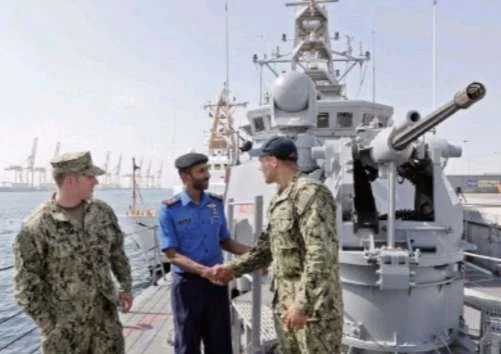
[Author organized COMRELs (Basketball/Football diplomacy) in Qatar for visiting Fifth Fleet Troops from Bahrain]
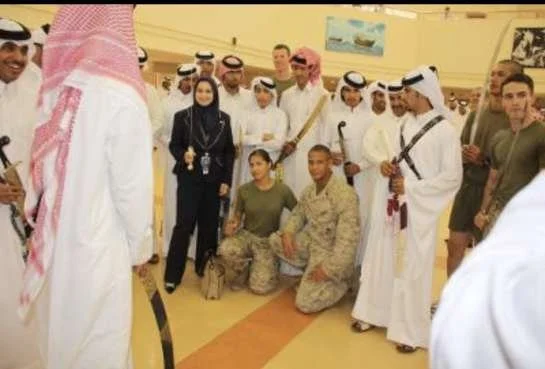
[The author as Cultural Affairs Officer in Qatar (2008-2010) connecting CENTCOM troops with local youth. Sword dancing after a Basketball clinic.]
Using Sports for Public Health in Chennai, India (2005–2007): To bypass severe public stigma surrounding HIV and AIDS, I inaugurated a high-profile football match specifically designed to draw massive crowds, desensitize a heavily stigmatized topic, and deliver critical health education directly where standard policy briefs failed.
Taekwondo Diplomacy in Sadr City, Baghdad (2013–2014): On the ground in Iraq, we launched a martial arts initiative specifically targeting orphaned children who were high-value targets for extremist group radicalization. We didn’t teach aggression; we taught physical agency, mutual respect, and the profound self-restraint required not to strike. By replacing militia hierarchies with the disciplined structure of the mat, we built a psychological shield around these children, intercepting the pipeline to radicalization.
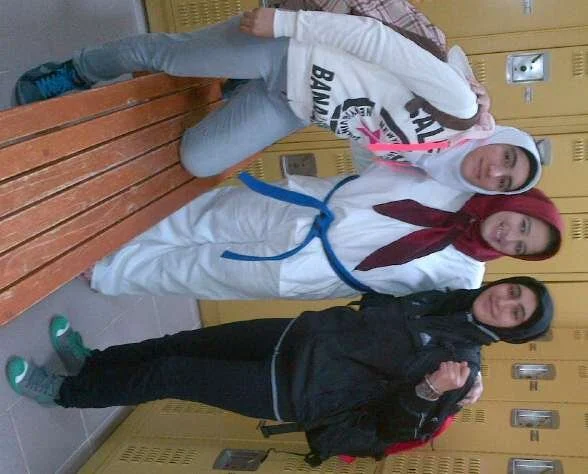
[Author (center) with Iraqi female national-level Tae Kwondo champions from Sadr City, Iraq—trained under Sports Diplomacy/CVE program]
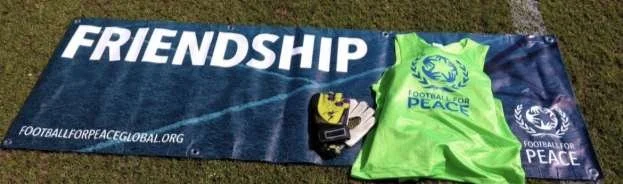
Surviving Internal Crises in London (2015–2018): When navigating a toxic, “queen bee” workplace environment designed to undermine confidence, I turned back to the pitch, joining an all-male embassy football team where there was no bureaucratic gaslighting—only performance and competence. I then scaled that personal resilience into a major policy initiative, partnering with Ambassador Woody Johnson to launch the “Football for Peace” initiative to bridge deep social divides across London.
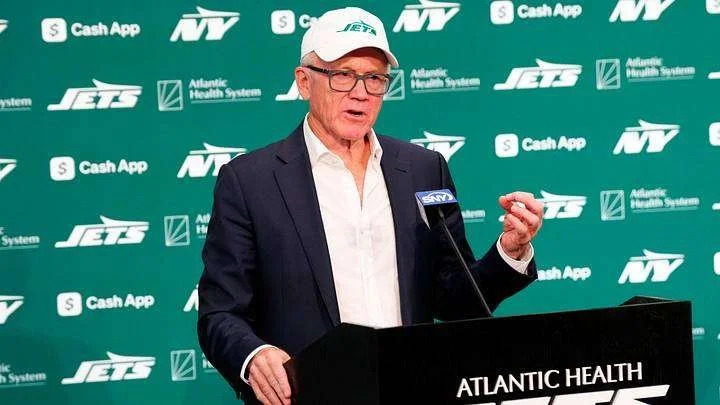
[Woody Johnson, primary owner of the New York Jets, is shown during a press conference, at the Atlantic Health Jets Training Center, Monday, January 27, 2025, in Florham Park. | Kevin R. Wexler-NorthJersey.com / USA TODAY NETWORK via Imagn Images]
Gaining Ground Through Sheer Grit at Quantico (2019): While at the Marine Command & Staff College, I represented our cohort as a Center Back in a high-stakes football game against formidable international military attachés. We won not through flashy plays, but through relentless blocking, absolute teamwork, and refusing to give up an inch—proving that whether you are in the trenches or leading a diplomatic delegation, success requires doing the heavy lifting.
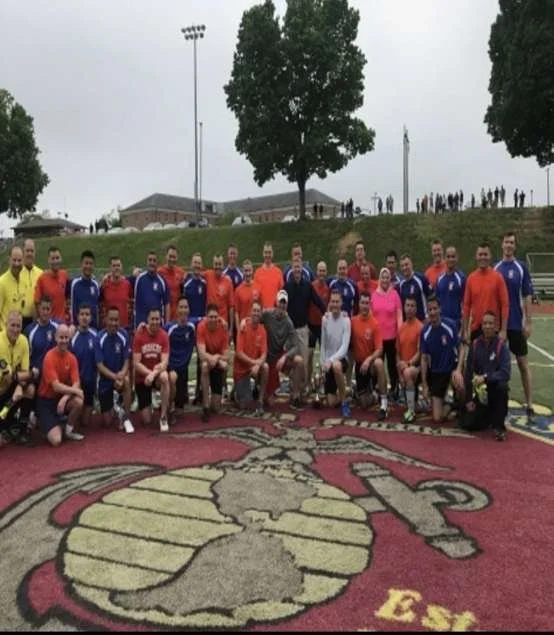
[Author (pink shirt) with Marine Officers’ Soccer team—playing against international military attaches at the Marine Command & Staff College (2019)]
Overcoming the Caricature
Watching the World Cup unfold this year brings this entire journey full circle. Seeing the USMNT base their training camp in my hometown of Irvine, California, is a deeply personal reminder of how global sports perfectly bridge the local and the international. Players like Folarin Balogun represent the true spirit of modern sports diplomacy: talent, international mobility, and excellence that transcends borders. On the global stage, nobody cares about your background, your politics, or your credentials—they care if you can deliver when the clock is ticking.
When we host mega-events like the World Cup in the United States, that exact same operational framework scales up to a national level.
Let’s be candid: we live in a time when official American popularity can hit low ebbs globally, and international perceptions of our foreign policy encounter institutional friction. Headlines, political rhetoric, and media caricatures can easily paint a monolithic, distant, or unfavorable portrait of our country. But when a global tournament is hosted on American soil, that entire caricature completely shatters.
Why? Because the world finally steps past the headlines and meets the American people.
International visitors arrive expecting the screen version of America, but instead, they encounter our society’s greatest competitive advantage: our generous spirit, our fierce pluralism, and our organic hospitality. The true magic of people-to-people diplomacy is driven by the American people themselves—the small-town warmth of local volunteers, the unexpected fusion of cultures proudly shared in our neighborhoods, and the genuine enthusiasm of everyday citizens welcoming strangers into their home cities with open arms.
The Limits of Top-Down Public Diplomacy
This reality underscores a critical lesson for our fellowship and our broader mission to reform the department: Traditional, government-orchestrated public diplomacy programs simply cannot achieve what we achieve by hosting major global sporting events.
No matter how large our budget or how meticulously planned our campaigns are, top-down programming carries the inescapable weight of official government messaging. It feels transactional, curated, and inherently political to a foreign audience. But when we host a global tournament, the State Department bureaucracy steps back, and the nation steps forward.
Best of all, this massive wave of people-to-people diplomacy achieves these historic results without spending a single dime of taxpayer money on government exchange programs. Instead of relying on Washington-funded initiatives and endless budget allocations, the heavy lifting is carried organically by the free market, private sectors, and the unforced generosity of individual citizens.
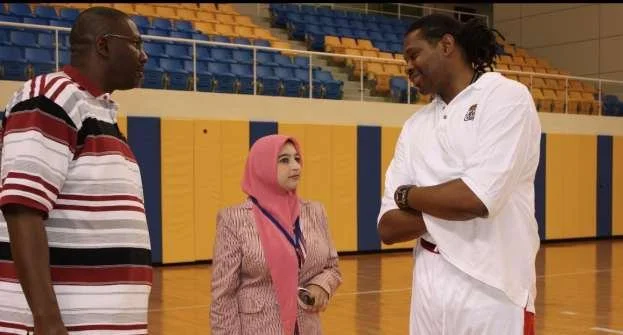
[Author discussing programming schedule with Sports Envoys (former Chicago Bulls Basketball players/Olympians) selected by the State Department to advance Sports Diplomacy initiatives]
We cannot manufacture the raw authenticity of citizen-to-citizen goodwill with a government grant. Traditional public diplomacy programs cannot replicate the massive, unscripted scale of millions of foreign visitors interacting directly with everyday Americans on subways, in diner booths, and in stadium parking lots.
The proof is currently exploding across our screens. Foreign fans are flooding social media with a refreshing, pure wonder as they experience everyday Americana:
The Travel and Culture Discoveries: German content creator Freddy @FreddyLA7 on X has become a viral internet sensation, racking up tens of millions of views by documenting his road trip through the American South, gushing over the legendary hospitality of Waffle House and the wonders of Buc-ee’s.
The Unfiltered Appreciation: Visitors from across Europe are openly admitting that their hometown media lied to them about what this country is like. As British traveler Joshua Cauldwell noted on Instagram, the tournament has allowed people outside of America to finally see the country through their own eyes rather than a hyper-polarized news lens.
The Cultural Takeovers: From Scotland’s famous Tartan Army taking over Boston and declaring it a “second home” due to the incredible local warmth, to visitors losing their minds over the simple kindness of strangers, the narrative of a cold, divided superpower has been totally dismantled.
The Magic of People-to-People Diplomacy
Football is a language the rest of the planet speaks fluently. When the United States opens its stadiums to the world’s game, it sends a powerful message of humility and hospitality: We value what you love.
The serendipitous love for America that blossoms during these tournaments isn’t manufactured by Washington PR campaigns or strategic messaging documents. It is earned organically. It is the unforced camaraderie of a local family sharing a tailgate with traveling fans, or a retail worker going out of their way to give a lost visitor directions.
At a time when global divisions run deep and traditional diplomacy faces uphill battles, hosting the world isn’t just about sports metrics or economic windfalls. It is a profound investment in our finest national asset. By letting the American people step forward as our frontline ambassadors, global sports tournaments don’t just showcase our world-class facilities—they reveal our soul, disarm deep-seated prejudices, and remind the world why America remains uniquely great.